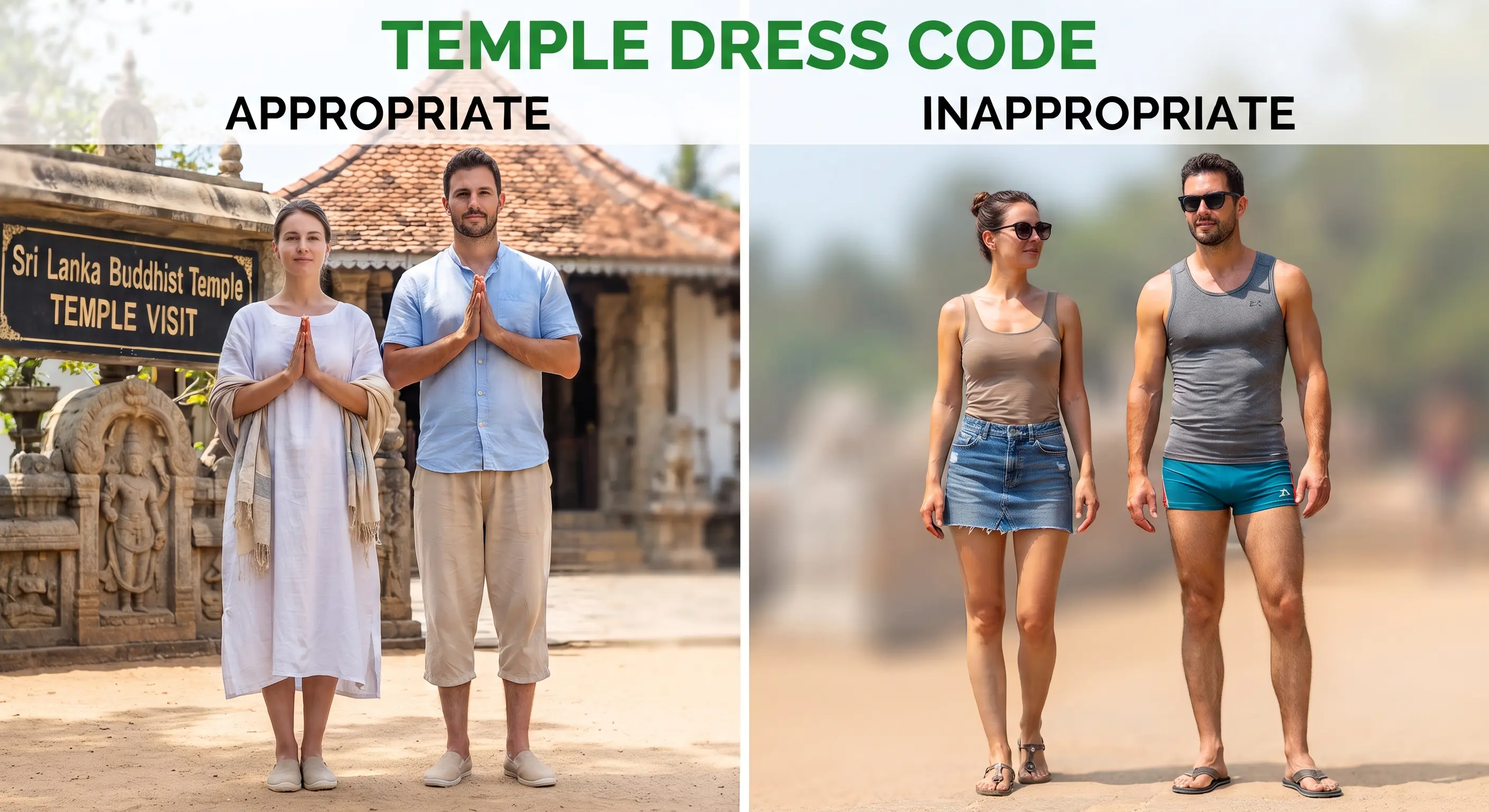
Visiting Sri Lanka’s breathtaking temples, ancient ruins, and sacred sites is a highlight of any trip to the island. Whether you are exploring the majestic Temple of the Tooth in Kandy, climbing the historic steps of Mihintale, or wandering through ancient Buddhist and Hindu shrines, you are in active, deeply revered places of worship.
This guide is your essential manual for navigating these sacred grounds with respect and cultural sensitivity.
1. The Golden Dress Code for Temples
The core principle is modesty. Both men and women must adhere to these rules to show respect and avoid being turned away at the entrance.
- Cover Shoulders and Knees: T-shirts or shirts must cover your shoulders (no singlets, tank tops, or spaghetti straps). Trousers or skirts must cover your knees. This applies equally to men and women. Loose, breathable clothing is best.
- Skip the Beachwear: Temple grounds are not the place for swimsuits, gym wear, crop tops, or sheer fabrics.
- The "White" Tradition: While not strictly mandatory for foreign visitors, white is the traditional color of reverence at Buddhist sites. Wearing clean white clothing shows deep respect.
- Pack a Sarong: This is a lifesaver! Always carry a lightweight sarong or large scarf in your daypack to quickly cover your shoulders or wrap around your legs if your current attire is insufficient.
2. Shoes, Hats, and Feet
Specific customs apply to your extremities and posture when inside religious compounds.
- Remove Shoes and Headwear: Hats, sunglasses, and all footwear must be taken off before stepping onto sacred temple grounds. Be prepared to leave your shoes at a designated counter.
- The Lifesaving "Sock Hack": Courtyards at large archaeological sites (like Anuradhapura) are made of granite that bakes under the intense tropical sun. Packing a pair of dark, thick socks to slip on after taking off your shoes will save your feet from the burning stone.
- Watch Your Feet: Never point the soles of your feet toward a Buddha image, shrine, or a monk. When sitting down, keep your legs neatly tucked to the side or sit cross-legged.
3. Imagery and Photography Protocols
Sri Lanka holds Buddhist imagery in the highest possible regard, and violating image protocols is considered a grave offense with potential legal consequences.
- Never Pose with Your Back to Buddha: Taking a selfie, portrait, or group photo with your back turned to a Buddha statue is a profound insult. Always face statues directly and respectfully when photographing them.
- No Buddha Tattoos or Clothing: Displaying Buddha images or deity symbols on clothing, bags, or jewelry is a serious offense. If you have a tattoo depicting Buddha, ensure it is completely covered with clothing or a plaster at all times to avoid severe fines or deportation.
4. Hindu Kovils & Mosques
The principles of modesty and removing shoes generally apply to other religious sites as well, but always be aware of local variations. At Hindu Kovils, men may sometimes be required to remove their shirts to enter the innermost shrines. At Mosques, women are expected to fully cover their arms, legs, and heads with a scarf.
Explore Sri Lanka's Heritage with a Local Guide
Navigating local customs is seamless when you travel with a knowledgeable local expert. Ceylon Travel Buddy provides licensed chauffeur guides who ensure you are always prepared, appropriately dressed, and deeply informed at every sacred site.
Ready to plan your cultural adventure? Contact us to build your custom itinerary today!